
When we talk about blockchain, a "fork" is simply the process of upgrading a network's underlying code. While many updates happen seamlessly, others introduce complex new features that are fundamentally incompatible with the older system.
These radical changes, known as hard forks, require significant community effort to activate and can sometimes disrupt the entire network.
Understanding the mechanics behind these different forks is an essential step toward grasping the full potential of blockchain technology. Let’s figure out how exactly these vital upgrades work.
What is a Hard Fork?
A hard fork refers to a significant and permanent divergence in the blockchain protocol of a cryptocurrency. It occurs when developers implement a radical change to the existing rules and structure of a blockchain network. This change creates a new version of the blockchain that is incompatible with the previous version.
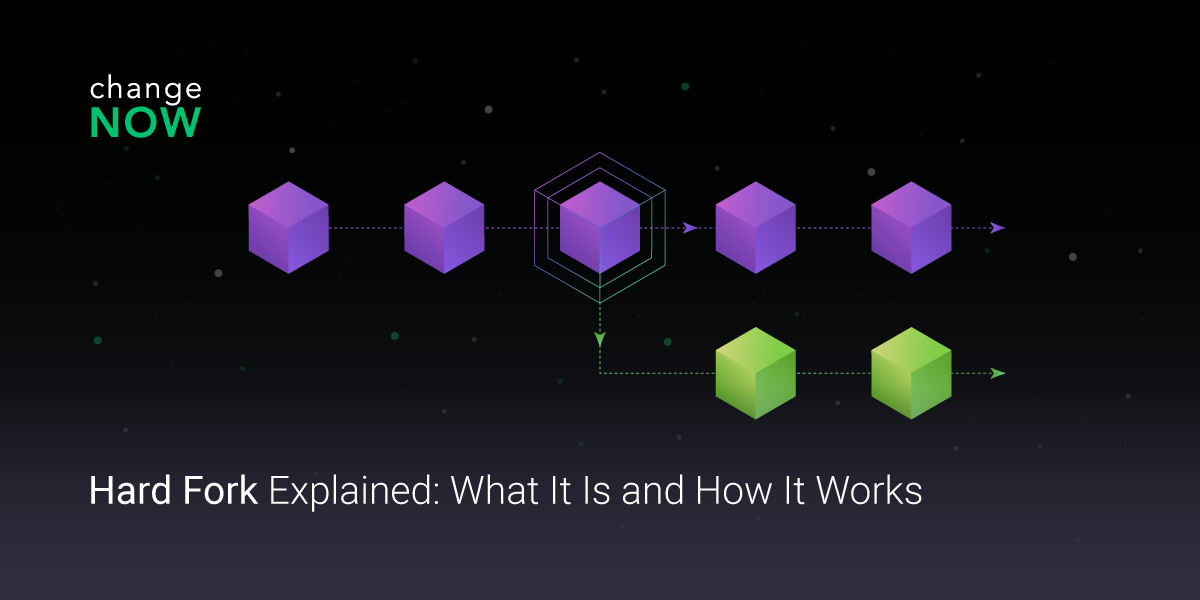
The term "hard fork" is derived from the image of a fork in a road, where the blockchain splits into two separate paths. Each path follows its own set of rules and protocols, resulting in the formation of two distinct cryptocurrencies.
Forks in Blockchain
To understand hard forks, it is essential to comprehend the concept of forks in blockchain technology. A fork occurs when the blockchain network splits into two separate paths, resulting in the creation of two distinct versions of the blockchain.
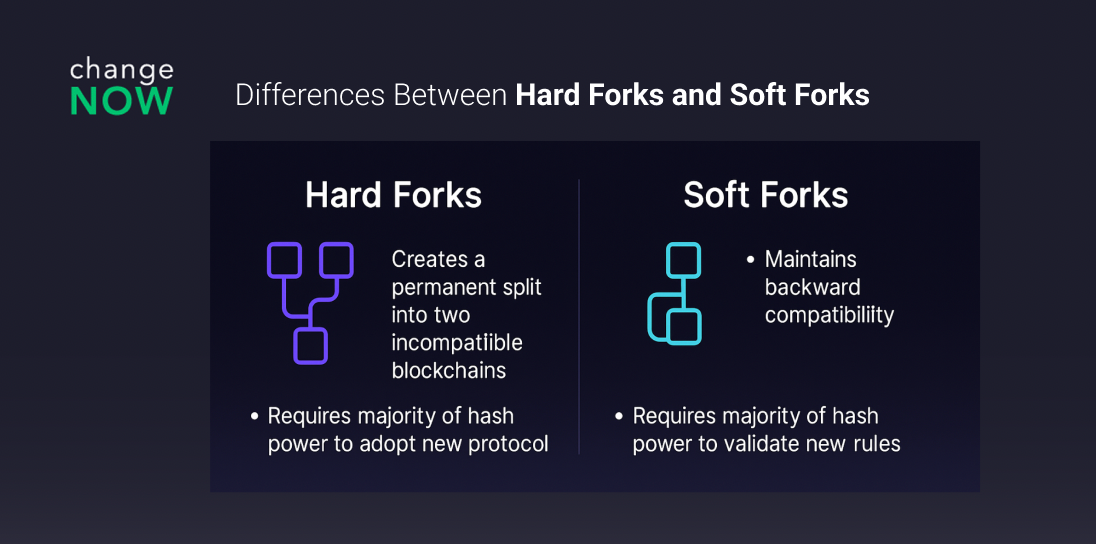
Forks can be categorized into two types: hard forks and soft forks. While hard forks result in the creation of a new and incompatible blockchain, soft forks introduce backward-compatible updates to the existing blockchain.
How Hard Forks Work
During a hard fork, developers propose changes to the existing blockchain protocol. These changes can include modifications to the consensus mechanism, block size limits, transaction validation rules, or any other aspect of the blockchain's functionality.
Once the proposed changes are implemented, two versions of the blockchain coexist. Nodes that have adopted the new protocol continue to validate and propagate transactions according to the updated rules, while nodes that have not upgraded remain on the old protocol.
This divergence in protocols creates a split in the blockchain, leading to the formation of two separate cryptocurrencies. Holders of the original cryptocurrency receive an equivalent amount of the new cryptocurrency, reflecting the state of the blockchain at the time of the hard fork.
Differences Between Hard Forks and Soft Forks
Notable Historical Hard Forks
Bitcoin Improvement Proposal 91 (BIP 91)
One of the most significant hard forks in the history of cryptocurrency is the implementation of Bitcoin Improvement Proposal 91 (BIP 91) in 2017. BIP 91 aimed to resolve the scalability issue faced by the Bitcoin network by activating the Segregated Witness (SegWit) upgrade.
The activation of BIP 91 required a significant majority of miners to signal their support for the proposal. Once this threshold was reached, the SegWit upgrade was activated, enhancing the network's capacity to process a higher volume of transactions.
The DAO Heist
Another notable hard fork event occurred in 2016, involving the Ethereum network. The Decentralized Autonomous Organization (DAO), a smart contract-based investment fund built on the Ethereum blockchain, was hacked, resulting in the theft of millions of Ether (ETH).
In response to this security breach, the Ethereum community conducted a hard fork to reverse the unauthorized transactions and return the stolen funds to their rightful owners. This hard fork led to the creation of two separate blockchains: Ethereum (ETH) and Ethereum Classic (ETC).
Bitcoin Cash (BCH)
Bitcoin Cash (BCH) is a prominent example of a hard fork that occurred within the Bitcoin network. It was created in 2017 to address scalability issues and increase the block size limit from 1MB to 8MB.
The hard fork resulted in the formation of two separate blockchains: Bitcoin (BTC) and Bitcoin Cash (BCH). Bitcoin Cash aimed to provide faster transaction processing times and lower transaction fees compared to Bitcoin.
Ethereum Classic (ETC)
Ethereum Classic (ETC) emerged as a result of the hard fork that occurred after the DAO hack in 2016. While the majority of the Ethereum community supported the hard fork to reverse the unauthorized transactions, a minority chose to remain on the original blockchain, which became Ethereum Classic.
Ethereum Classic continues to operate on the pre-fork blockchain, upholding the principles of decentralization and immutability. It serves as an alternative version of Ethereum, offering developers and users different options for building and utilizing smart contracts.
Impact of Hard Forks on Cryptocurrencies
Hard forks often have a significant impact on the price volatility of cryptocurrencies. The announcement and anticipation of a hard fork can lead to increased market speculation and trading activity. Traders and investors may buy or sell cryptocurrencies in anticipation of receiving new coins from the hard fork or to take advantage of potential price fluctuations.
After a hard fork, the price of the original cryptocurrency and the newly created cryptocurrency may experience significant fluctuations. Factors such as market sentiment, community support, and the perceived value of the new cryptocurrency can influence the price dynamics.
One of the primary outcomes of a hard fork is the creation of a new cryptocurrency. Holders of the original cryptocurrency receive an equivalent amount of the new cryptocurrency, reflecting the state of the blockchain at the time of the hard fork.
The new cryptocurrency may have distinct features, functionalities, or improved scalability compared to the original cryptocurrency. It may also provide an opportunity for developers and users to experiment with different blockchain protocols and governance structures.
Conclusion
Hard forks are structural mechanisms that allow blockchains to implement major upgrades or split into entirely new networks. These events often trigger short-term volatility and force communities to choose which protocol path to support.
Knowing how these network updates execute helps you manage your assets safely during a transition. By tracking upcoming protocol changes, you can anticipate how a fork will impact your operational workflows and holdings.


